Category: Uncategorized

  • How to Tell If Your Gutters Are Damaged After a South Shore Storm

    When you need reliable South Shore gutter repair, catching storm damage early is critical to protecting your home’s foundation, basement, and exterior trim. Between harsh coastal wind gusts off Massachusetts Bay and sudden seasonal downpours, South Shore gutter systems endure significant wear and tear year-round.

    Your gutters serve as your home’s primary defense against foundation erosion, basement flooding, and costly fascia rot. However, serious water damage isn’t always as visible as a hanging downspout after a nor’easter. Before minor leaks turn into an expensive exterior renovation, inspect your roofline for these critical warning signs.

    Top Signs You Need South Shore Gutter Repair

    1. Standing Water and Overflow Along the Roofline

    If water cascades over the edge of your gutters like a waterfall during moderate rainfall, the issue is not always a simple leaf clog. South Shore winds frequently blow pine needles, acorns, and coastal debris into the troughs, altering the system’s pitch. Gutters require a precise downward slope toward each downspout—typically a quarter-inch drop for every 10 feet of trough. When gutters sag or lose their slope, standing water pools in place, stressing mounting brackets and creating prime conditions for destructive winter ice dams.

    2. Visible Gaps, Sagging, or Separation from Fascia

    Take a walk around your home and inspect your roofline from the ground. Gutters should run in a clean, tight line flush against the fascia boards. If you notice sagging sections or daylight between the gutter trough and the wood trim, the hidden hangers or fascia screws have likely backed out. Once water slips behind the gutter trough, it directly saturates the fascia and soffits, leading to hidden rot, pest intrusion, and structural wood decay.

    3. Basement Moisture and Foundation Pooling

    Roof troughs are only the first stage of water management; downspouts must direct high-volume runoff at least 4 to 6 feet away from your foundation. If you spot soil erosion near exterior walls, standing puddle zones around the perimeter, or new musty dampness in the basement, your downspouts or underground drainage connections may have disconnected or collapsed under soil weight. Comprehensive exterior maintenance addresses the full drainage pathway to keep subterranean masonry dry.

    4. Rust, Cracks, or Peeling Exterior Paint

    Sectional gutters with seams often split at corner miters and joints due to Massachusetts freeze-thaw cycles. Look for visible rust patches, separated joint sealant, or peeling paint along your home’s siding directly underneath the gutter line. These streaks signal chronic, low-volume leaks that quietly rot exterior framing long before major pooling is detected on the lawn.

    Why Timely Gutter Maintenance Protects Your Investment

    Delaying gutter repairs along coastal Massachusetts rarely saves money. Small alignment defects quickly compound into rotted roof decking, damaged siding, landscape washouts, and water intrusion through foundation walls. Upgrading worn sections, installing seamless aluminum troughs, and scheduling routine seasonal inspections protects your property investment through nor’easters, heavy winter snow loads, and torrential summer downpours.

    Routine maintenance should also include inspecting your underground drainage connections and splash blocks. When severe coastal storms dump multiple inches of rain within hours, properly pitched troughs and clear downspout outlets ensure thousands of gallons of water are safely redirected away from your home’s structural footprint.

    According to weather protection guidelines from the Massachusetts Emergency Management Agency, keeping exterior water-shedding systems clear and mechanically sound is one of the most effective ways homeowners can prevent localized storm flooding.

    Need trusted South Shore gutter repair? Reach out to Up The Gutter today for a full exterior assessment and protect your home against the next major coastal storm.
  • Why Alu-Rex Gutter Guards Are the Ultimate Upgrade for New England Homes

    Why Alu-Rex Gutter Guards Are the Ultimate Upgrade for New England Homes

    Living on the South Shore of Massachusetts means your home faces some of the harshest coastal weather in the country. From Nor’easters dumping gallons of rain to heavy winter blizzards and freeze-thaw cycles, your gutter system takes a beating all year long.

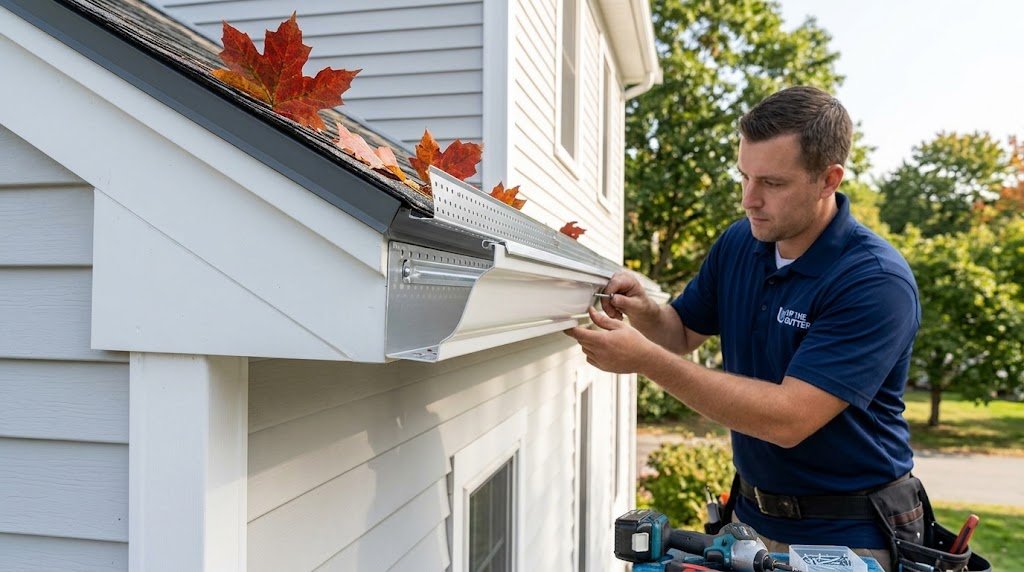
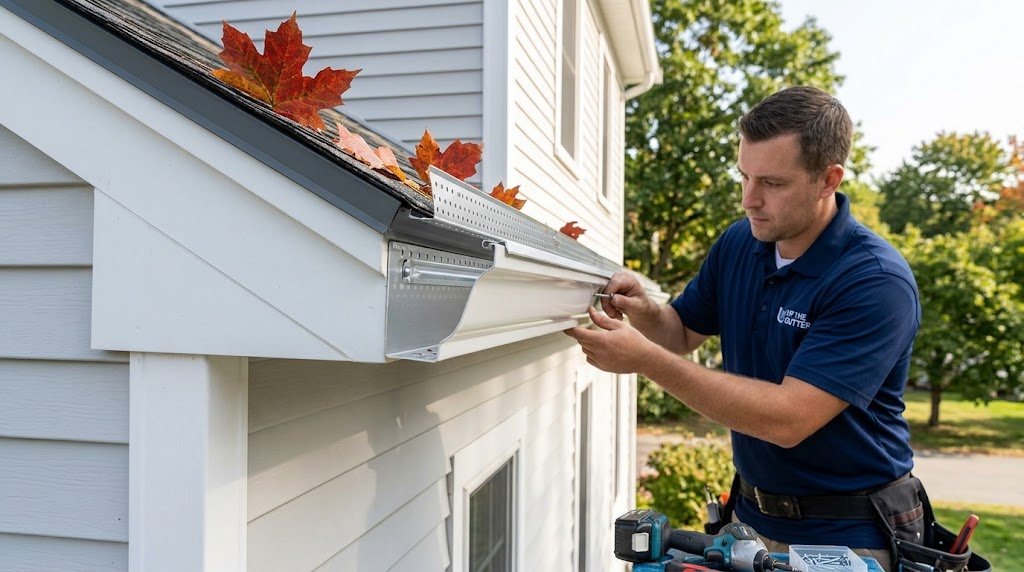
    Traditional open gutters and flimsy clip-on screens frequently fail under this weight. If you want a long-term, structural solution that stops clogs, prevents sagging, and withstands brutal New England winters, the Alu-Rex Continuous Hanger System (T-Rex®) is the industry leader.

    Here is why Alu-Rex is the superior investment for your home.


    1. Continuous Structural Support (No More Sagging)

    Traditional gutters rely on hidden spike-and-ferrule or individual clip hangers placed every 16 to 24 inches. Over time, heavy snow and ice pull these fasteners loose from the fascia board, causing the gutter to sag, pull away, and leak.

    Alu-Rex replaces separate hangers with a continuous fastening system running the entire length of the gutter.

    • Uniform Strength: Fastened continuously from end to end, eliminating weak points between brackets.
    • Superior Load Capacity: Strong enough to support the weight of heavy ice and even ladders leaned directly against the trough.
    • Fascia Protection: Features self-sealing screws that form a water-tight seal against your fascia board, preventing rot and moisture infiltration.

    2. Built for Harsh New England Freeze-Thaw Cycles

    Winter is where standard gutter guards fail most. Plastic covers crack in sub-zero temperatures, and traditional micro-mesh screens can turn into ice bridges, creating severe ice dams.

    • Snow & Ice Barrier: Heavy snow and ice remain on top of the perforated aluminum cover, protecting the inside channel from expansion damage.
    • Continuous Drainage: As roof snow melts in the sun, water drains directly through the perforations into the clear trough below, keeping meltwater moving away from your foundation.

    3. Maximum Water Flow Without Overshooting

    A major flaw of curved “surface tension” helmet guards is that heavy rainfall can overshoot the trough and pool around your foundation.

    Alu-Rex uses a precision-engineered perforated aluminum surface paired with a patented roll-back front edge:

    • Drains up to 32.9 inches of water per hour per linear foot—well beyond any coastal storm capacity.
    • The flat, aerodynamic profile allows normal New England breezes to dry out and blow away pine needles, oak leaves, and roof granules naturally.

    Alu-Rex vs. Traditional Gutter Guards

    FeatureAlu-Rex Continuous SystemStandard Micro-Mesh Add-onsDIY Plastic / Clip-On Screens
    Fastening SystemContinuous Full-Length AnchorIndividual Brackets (every 16″-24″)Snap-on (No structural support)
    Snow & Ice DurabilityHeavy-duty (Prevents trough warp)Moderate (Ice buildup risk)Fragile (Prone to collapsing)
    Heavy Rainfall CapacityUp to 32.9 in/hrModerate (Risk of mesh blinding)Low (Prone to overflow)
    Fascia Board SealContinuous waterproof sealOpen gaps behind bracketsOpen to moisture
    Long-Term ValueLifetime structural durability5–10 years1–3 years

    Upgrade Your Gutters with Up The Gutter

    Protect your fascia, foundation, and roofline with a gutter system engineered to handle New England weather. At Up The Gutter, we specialize in professional seamless gutter installation outfitted with heavy-duty Alu-Rex systems across the South Shore.

    Contact Up The Gutter today for a free on-site estimate and upgrade your home’s exterior protection!

  • Why Black Streaks and Roof Algae Are Ruining Your Roof (And How Atlas Shingles Fix It)

    If you have noticed dark, ugly streaks caused by roof algae running down your roof, you are not alone. Homeowners across the South Shore and New England frequently ask us if those black stains mean their roof is rotting or needs to be replaced immediately.

    While those black streaks look like mold or dirt, they are actually an airborne organism called Gloeocapsa Magma—a blue-green roof algae that thrives in humid, damp climates.

    Here is what you need to know about roof algae, why traditional cleaning is only a temporary band-aid, and how upgrading to Atlas Shingles can permanently protect your home’s curb appeal.

    What Causes Black Streaks and Roof Algae on New England Roofs?

    Roof algae feeds on the calcium carbonate limestone used as filler in standard asphalt shingles. When airborne spores land on your roof—especially on shaded, north-facing slopes or under overhanging trees—they begin to spread, creating dark, streak-like colonies.

    Beyond making your home look aged and neglected, roof algae growth causes real issues:

    • Decreased Energy Efficiency: The dark stains absorb heat from the sun instead of reflecting it, raising your attic temperature and forcing your AC to work harder.
    • Granule Loss and Premature Aging: As roof algae holds moisture against your roof surface, it degrades the protective granules on your asphalt shingles over time.
    • Lower Home Value: Stained roofs severely diminish curb appeal if you are preparing to sell your home.

    Why Pressure Washing Isn’t the Answer for Roof Algae

    Many homeowners try to spray off roof algae with a pressure washer or harsh chemicals. However, high-pressure washing can blast off the protective granules of your shingles, voiding your roof warranty and shortening its lifespan. Soft washing with chemicals removes visible roof algae today, but because the algae’s food source (limestone filler) remains, the black streaks almost always return within 12 to 24 months.

    The permanent solution isn’t how you clean your roof—it’s what roof you install.

    The Solution: Atlas Shingles featuring Scotchgard Protector

    When it’s time for a roof repair or full replacement, choosing algae-resistant materials saves you thousands in maintenance down the road. That’s why we recommend Atlas Asphalt Shingles engineered with Scotchgard Protector by 3M.

    How Atlas Shingles Prevent Roof Algae Growth:

    1. Real Copper Granules: Atlas shingles are manufactured with a minimum blend of 10% 3M Copper Granules distributed evenly across every shingle. Copper naturally prevents roof algae spores from taking root.
    2. Lifetime Algae Resistance: Unlike standard algae-resistant shingles that only offer 5 to 10 years of protection, Atlas shingles with Scotchgard Protector carry a Lifetime Algae Resistance Limited Warranty.
    3. Unmatched Curb Appeal: Your roof stays looking brand-new year after year without needing aggressive chemical treatments or soft washing.

    Frequently Asked Questions About Roof Algae

    Will roof algae damage my shingles?

    Yes. Over time, roof algae holds dampness against your roof and feeds on the limestone filler in asphalt shingles, leading to granule loss, reduced energy efficiency, and premature roof aging.

    How often should I treat roof algae?

    Standard chemical soft-washing only kills surface roof algae temporarily, requiring retreatments every 1–2 years. Installing algae-resistant shingles like Atlas Shingles with Scotchgard Protector provides permanent, lifelong prevention.

    Protect Your South Shore Home with Up The Gutter

    Whether you need a full roof replacement, asphalt shingle repairs, or gutter upgrades to keep water moving away from your home, Up The Gutter is here to help.

    Our experienced local team provides top-quality roofing installations, soft washing services, and seamless gutter solutions across the South Shore of Massachusetts. We take pride in helping local homeowners keep their property looking its best while preventing long-term water and structural damage.

    • Call Us Today: (781) 204-1248
    • Visit Our Office: 892 Plain Street, Marshfield, MA 02050
    • Get a Free Quote: Contact our local team to discuss your roofing and gutter needs!
  • Why Your New England Gutters Overflow in Heavy Rain (And How to Fix It)

    When severe coastal weather hits Massachusetts, your home needs dependable drainage. If you notice your gutters overflow in heavy rain, you are not just dealing with an annoying cascade of water—you are facing potential foundation settling, rotted fascia boards, and basement flooding.

    For homeowners across Marshfield and the South Shore, gutter failure during major downpours is a frequent issue. While a basic leaf clog is often the suspected culprit, several structural problems can cause a system to fail when water volume peaks.

    Understanding why your gutters struggle during intense rainstorms is the first step toward safeguarding your exterior.

    1. Undersized Troughs for Heavy Coastal Rainfall

    Standard 5-inch residential gutters simply lack the capacity required for intense storms. When tropical remnants or nor’easters push gallons of water down your roof pitch in minutes, standard systems quickly become overwhelmed.

    Upgrading to seamless 6-inch gutters increases water-carrying capacity by up to 40%. The wider trough ensures heavy rain is channeled away from your eaves before it can spill over the edge.

    2. Incorrect Gutter Pitch and Sagging

    Gutters may appear straight from the curb, but they require a precise downward slope toward the downspouts (typically 1/4 inch of drop for every 10 feet of run).

    Heavy snow accumulation, age, or loosened hidden hangers cause gutters to sag in the middle. When the pitch is lost, water pools in the low points and spills directly over the front lip before ever reaching a drain.

    3. Downspout Bottlenecks and Restrictions

    Even if your gutter troughs are clear, undersized or restricted downspouts create severe bottlenecks. If incoming water cannot exit as quickly as it enters, the entire run backs up within minutes.

    Pairing seamless gutters with oversized 3×4 downspouts allows high volumes of water to discharge safely away from your foundation.

    4. Ineffective or Clogged Gutter Guards

    Many generic mesh or screen filters sit flat and collect roof grit, pine needles, and oak debris on top. During heavy downpours, water sheets over the clogged screen like a solid ramp instead of dropping into the channel.

    Heavy-duty systems like continuous-hang ALU-REX gutter guards maintain full water intake while keeping coastal debris out of the trough.

    5. Improper Placement Below Roof Valley Junctures

    Roof valleys collect runoff from two adjoining roof planes, creating high-velocity streams of water during storms. If standard gutter troughs sit directly below these valleys without custom splash guards or wider corner miters, high-speed runoff overshoots the channel entirely.

    The Hidden Risks of Gutter Overflow

    Ignoring persistent overflow leads to costly structural damage over time:

    • Foundation Erosion: Water pooling around the perimeter erodes soil and causes basement wall seepage.
    • Fascia and Soffit Rot: Water backing up behind the gutter rots wooden eaves and invites pest infiltration.
    • Landscape Washout: Uncontrolled cascades destroy garden beds, mulch, and walkways.

    Frequently Asked Questions About Gutter Overflow

    How often should I clean my gutters on the South Shore?
    Homes surrounded by pine and oak trees require thorough cleanings at least twice a year—once in late spring and again in late fall before the first freeze.

    Can oversized downspouts fix my overflow issues?
    Yes. Upgrading standard 2×3 downspouts to oversized 3×4 commercial-grade downspouts doubles drainage capacity and eliminates water backup during severe coastal downpours.

    Why do clean gutters still overflow?
    Clean gutters overflow due to inadequate sizing (5-inch vs 6-inch), improper slope toward downspouts, roof valley overflow, or blocked underground drainage lines.

    Protect Your South Shore Home

    If your gutter system continues to fail during major storms, a professional layout evaluation can identify pitch errors, capacity limits, and drainage bottlenecks.

    At Up The Gutter, we design and install durable seamless systems engineered specifically for New England weather.

    Call us at (781) 204-1248 or reach out today to schedule your free project estimate.